Lab-grade
contaminant detection,
right at the source.

In under five minutes, anyone with a smartphone and Segura’s technology can test for heavy metals aligned with WHO drinking-water guidelines. Replace weeks of lab turnaround with real-time compliance data across your entire network.

Coming soon E. coli detection
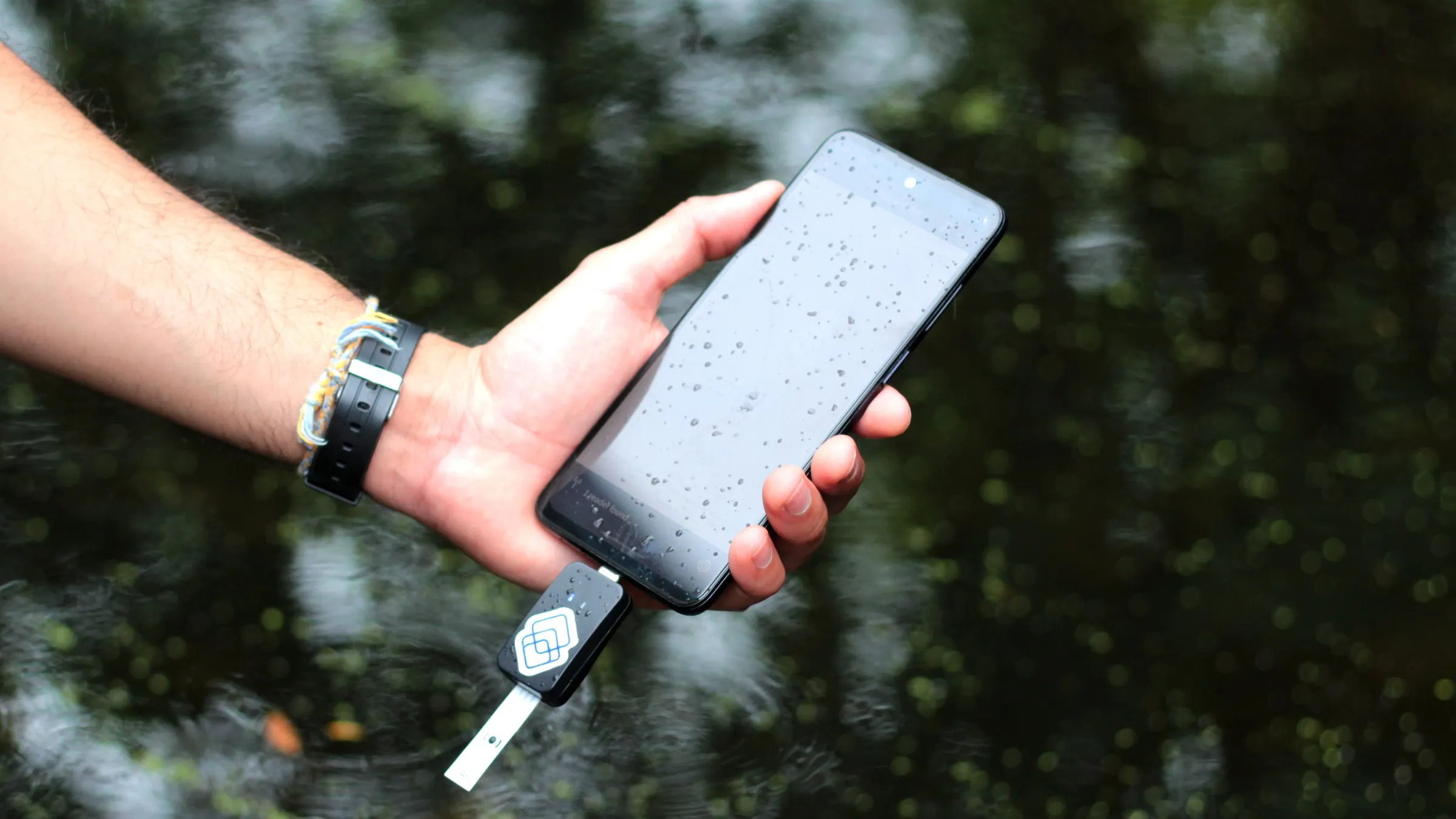
Segura reader and phone being used over an open body of water
01 — The Problem

Beyond access, water contamination and testing is a huge problem

1 in 4
People worldwide lack access to safe drinking water. (UNICEF, WHO, 2025)
1.7B+
People use a drinking water source contaminated with faeces. (WHO, 2022)
3%
Of global water-quality measurements come from the world’s poorest regions (60,000 of 2 million). (UN Water, 2025)

Current testing methods aren't keeping pace with the scale of the problem.

Centralised lab testing is slow, expensive, and labour-intensive. Samples must be collected, packaged, and couriered by trained staff. A specialist chemist processes each one. Results come back days — sometimes weeks — later. By then, the situation on the ground has moved on.

For utilities and operators, that means more staff hours per sample, higher per-test costs, and monitoring programmes that are too infrequent to be meaningful. As lead limits tighten under the EPA Lead and Copper Rule, the EU Drinking Water Directive, and UK DWI guidance, the compliance gap is growing.

Segura was built to close it.

How Segura solves this
02 — How It Works

Three steps. Five minutes.
No lab required.

Built on Anodic Stripping Voltammetry — decades of proven electrochemical science — reimagined with medical-grade manufacturing.

01
Collect & prepare your sample
Standard water sample collection using the Segura kit. No hazardous reagents. Preparation takes under 60 seconds with no prior training required.
→
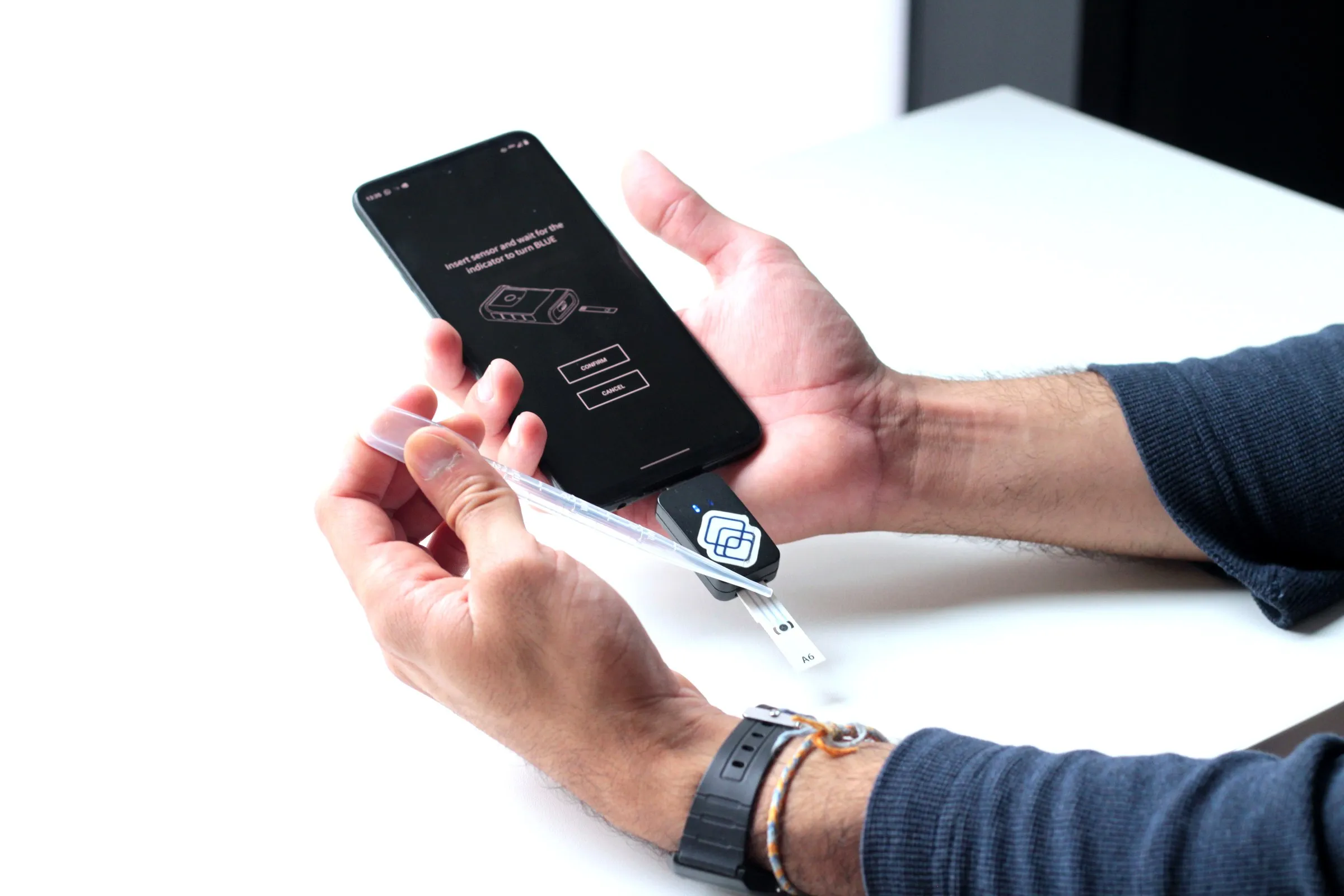
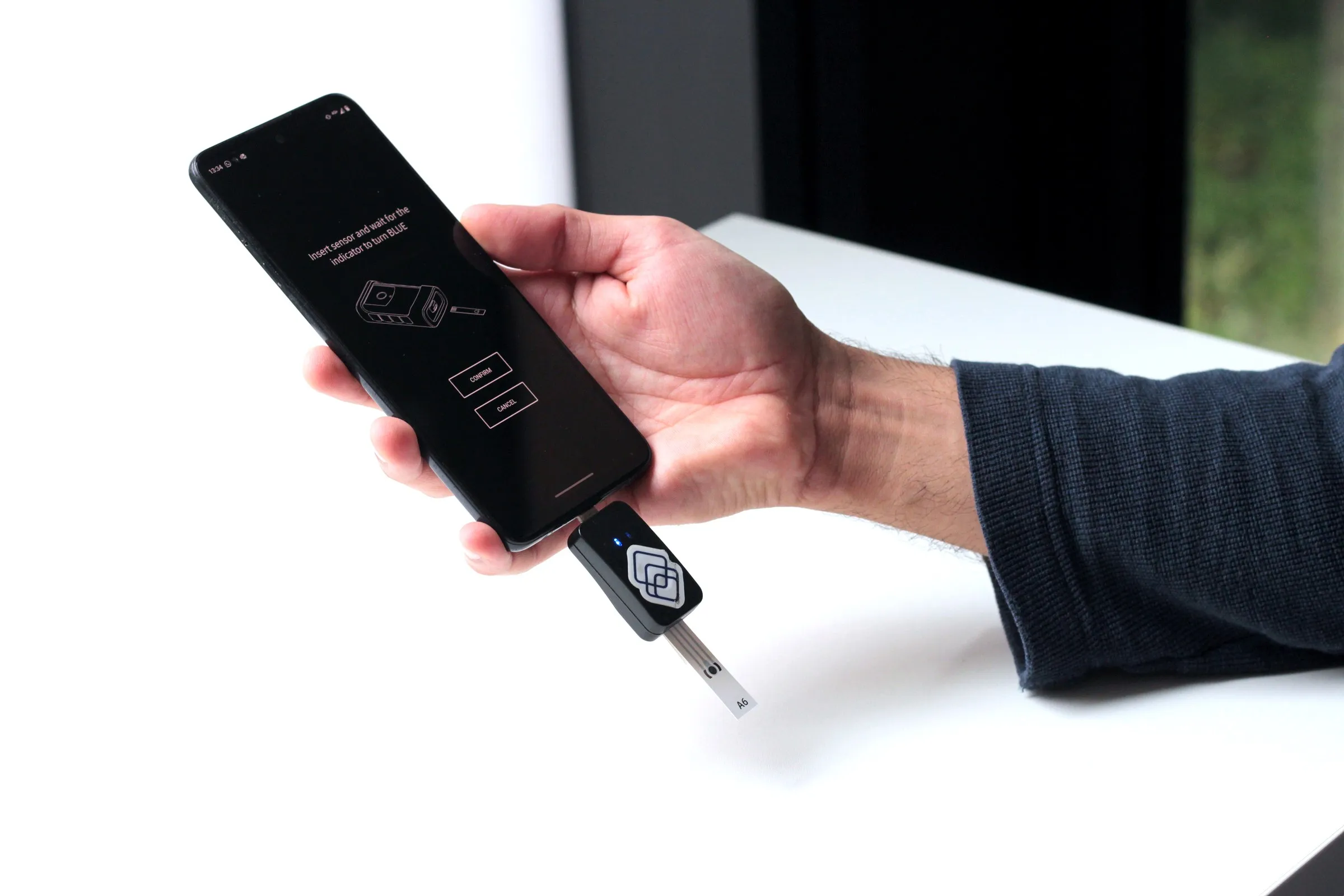
Hands inserting a Segura sensor strip into the reader, with the mobile app visible
02
Insert the test strip into the reader
The proprietary single-use sensor strip — similar in concept to a glucose monitor — is inserted into the portable reader. The device handles all electrochemical analysis automatically.
→
03
Read results. Sync to cloud.
Results appear in the Segura app in under five minutes. Raw data syncs automatically to cloud storage for audit trails, reporting, and regulatory compliance records.
90%
Cost reduction vs.
centralised lab testing
<5min
From sample to result —
no calibration needed
6 Weeks → 5 Minutes
Sample turnaround
measured in field pilots
Staff hours a year NYC DEP
says Segura could free up
03 — The Advantage

Simpler at every step.

Traditional lab testing was built for a different era. Here's how the two methods compare head-to-head.

Traditional Lab Testing Status quo
✕
Days to weeks for resultsSamples must be couriered to a fixed lab. Turnaround ranges from 48 hours to several weeks.
✕
$40–$200+ per testLab fees, specialist labour, courier logistics, and sample handling all add up.
✕
Trained chemist requiredEach sample must be processed by a specialist analyst, limiting test frequency and scale.
✕
Daily calibration & toxic wasteStandards preparation is time-consuming and generates hazardous chemical waste.
✕
Manual paperwork, error-proneResults transcribed by hand into compliance systems — an imperfect process.
Segura Field-ready
✓
Results in under 5 minutesOn-site, at the point of risk — no waiting, no logistics, no days of uncertainty.
✓
Up to 90% lower total costAffordable per-test pricing with no courier, no lab overhead, no specialist fees.
✓
Any field technician can run itNo chemistry background required. Training takes minutes, not months.
✓
No calibrationEach single-use strip carries its own calibration data. Zero daily setup. Zero toxic waste.
✓
Automatic cloud sync, full audit trailGPS-tagged results sync in real time. Every test documented and audit-ready, with no manual entry.
04 — Step by Step

The full workflow, compared.

Eight steps in a traditional lab workflow. Segura eliminates most of them entirely.

StepTraditional WorkflowSegura Workflow
1. Sample CollectionHomeowner/utility worker collects sampleUtility worker collects sample
2. Sample TransportCourier transports to lab (delays, costs)No transport needed
3. Sample LoggingLab technician logs and stores sampleNot required
4. Sample PreparationLab technician prepares/digests sampleNot required
5. AnalysisICP-MS operator runs testOn-site
6. Quality ControlQC manager reviews dataAutomated calibration in device
7. ReportingResults entered and sent manuallyAutomatic cloud upload via app
8. Compliance ReviewUtility/regulator interprets resultsImmediate results available
Total Cost Per Sample$225 – $560$25 – $60
Total People Involved8–91–2
Time to ResultDays to Weeks< 5 Minutes
✓ Faster, simpler, up to 90% cheaper
Segura Dashboard

Your results.
In real time.

Every test your field teams run is automatically synced to the Segura dashboard — GPS-tagged, timestamped, and ready for compliance reporting the moment it's complete.

📍
Live map of your network See every sampling point, colour-coded by result. Spot exceedances the moment they're flagged in the field.
📈
Trend analysis over time Track contaminant concentrations across sites and seasons. Identify patterns before they become compliance issues.
📋
Export-ready compliance reports One-click exports formatted for DWI, EPA, and EU DWD reporting requirements. No manual data entry.
🔔
Instant alerts on exceedances Get notified the moment a result exceeds your configured threshold — before the field crew has left the site.
app.segura-water.com/dashboard
Thames Valley — Week 14
● Live
47
Tests this week
1.8 μg/L
Mean Pb (avg)
2
Flags raised
Pb μg/L — last 10 samples
Site 12 — Abingdon Rd
1.2 μg/L ✓
Site 07 — Cowley Rd
8.4 μg/L ⚠
Site 23 — Botley Rd
0.9 μg/L ✓
01
Accuracy above all
Independently validated. Accuracy we can prove.
02
Built for the operator
Technology designed to be used by those working in the field.
03
Honest about limits
We assess each client’s needs individually. If Segura isn’t the right fit, we’ll tell you.
Sources & References
McFarland et al. (2022) — Population-wide lead exposure in US children, PNAS 119(11).
UK Health Security Agency (2023) — Lead Exposure in Children Surveillance System (LEICSS).
NRDC — Millions Served by Water Systems Detecting Lead.
WHO Fact Sheet — Lead Poisoning and Health.
US EPA — Lead and Copper Rule Improvements (LCRI).
EU Directive 2020/2184 — Revised Drinking Water Directive.
UK DWI — Lead in Drinking Water Guidance.
RSC Analyst (2019) — Tutorial review: Anodic Stripping Voltammetry for trace metal analysis.
Core Technology

The analytical gap
Segura closes

Detecting heavy metals at parts-per-billion concentrations in complex water matrices is analytically hard. ICP-MS requires laboratory infrastructure, trained analysts, and weeks of turnaround. Colorimetric field tests are fast but unreliable below 10 ppb. Neither method provides real-time, on-site data at the point of risk. Segura was built to close that gap.

Hand holding the Segura reader connected to a smartphone showing the app
Validation

The proof, up front.

Independently validated across 200+ real-world water samples — collected from live distribution networks by utility operators themselves and benchmarked against ICP-MS. Mean deviation is less than 8% across the full detection range, from low ppb to ppm. Named institutional partners across the UK, US, and Central America. See the full data ↓

200+
Real network samples vs ICP-MS
±8%
Mean deviation
2 ppb
Field-validated LOQ for lead
4
Named institutional partners
How ASV works
1

Deposition

A controlled voltage is applied to the electrode. Heavy metal ions in the water are attracted and deposited onto the electrode surface over 2–3 minutes.

2

Stripping

The voltage is reversed and ramped. Each metal ion releases from the electrode at a precisely characteristic potential, generating a distinct current peak.

3

Identification & Quantification

The position of each peak identifies the metal. The area under the peak gives its concentration — precise to sub-ppb levels.

Lead (Pb) detected 2.4 μg/L
Processed ASV scan — Pb & Cu co-detection For illustration only
⚠ Pb exceeds 5 μg/L limit
Pb ⚠ 8.4 μg/L Cu 0.8 μg/L −800 −600 −400 −200 0 Applied potential (mV vs. Ag/AgCl) 0 2 4 Current (μA)

Pb ⚠

8.4 μg/L detected

Exceeds EU DWD limit (5 μg/L)

Cu

0.8 μg/L detected

Within limits

Cd, Zn also co-detectable in extended panel scan

The science behind the strip

Anodic Stripping Voltammetry (ASV) is an electroanalytical technique that has been used in trace metal research since the 1970s — often described as the poor man's mass spectrometry. Under laboratory conditions it is capable of detecting metal ions at concentrations as low as parts per trillion, using equipment that fits in a pocket.

Historically, ASV's sensitivity depended on mercury-based electrodes — hanging mercury drop or mercury film — which made the technique a non-starter outside controlled laboratory environments because of mercury's toxicity, handling requirements, and waste disposal constraints. Segura's chemistry is entirely mercury-free and non-toxic, engineered specifically so the same analytical performance can be delivered in a disposable, field-safe format.

The measurement happens in two steps. During the deposition phase, a controlled negative potential is applied to the electrode surface, electrochemically plating dissolved metal ions directly onto the electrode. This pre-concentration step is what gives ASV its sensitivity advantage: metals accumulate over 2–3 minutes, effectively concentrating the signal before measurement begins.

During the stripping phase, the potential is swept positive. Each accumulated metal oxidises and releases from the surface at a characteristic potential — its electrochemical fingerprint. The resulting current peak height is proportional to concentration. Because lead, copper, cadmium, and zinc strip at distinct, well-separated potentials, all four can be co-detected in a single measurement without any separation chemistry.

Segura's proprietary reader interprets that signal on-device in real time — no cloud processing required for a result. This same technology is now being applied to measure E. coli concentrations.

Why ASV, Why Now?

Three analytical approaches exist for heavy metals detection in the field. The differences in sensitivity, multi-metal capability, and matrix tolerance are not incremental — they determine whether a technology is fit for regulatory-grade monitoring.

Colorimetric
Strip tests, Palintest-style
Chronoamperometry
Electrochemical, single-analyte
ASV — Segura
Proprietary multi-metal platform
LOQ — lead ~5–10 ppb ~2–4 ppb ✓ 2 ppb validated · 0.1 ppb target (Q2 2026)
Upper quantification range Low, saturates in dirty water Narrow ✓ Up to 2 ppm · higher with standard sample dilution
Multi-metal panel No Single analyte per test ✓ Yes — simultaneous Pb, Cu, Cd, Zn in one run
Pre-concentration step No No ✓ Yes — electrochemical pre-concentration drives sensitivity
Affected by turbidity or colour Yes — results unreliable in turbid or coloured samples No ✓ No — electrochemical, not optical
Matrix interference suppression None Limited ✓ Proprietary sample preparation step normalises matrix
Result time 2–5 min 1–3 min 3–5 min
Consumable cost Low Medium Low
Regulatory-grade sensitivity (EU DWD 5 μg/L Pb) No — LOD too high Marginal ✓ Yes — validated at sub-regulatory concentrations

Built for the real world

Designed for reliability in the field — not just performance in the lab.

⚡
Field LOQ (lead)
2–4 ppb
Field-validated limit of quantification. EU DWD limit for lead is 5 ppb (5 μg/L) — Segura quantifies reliably well below the regulatory threshold.
⏱
Time to Result
<5 min
Full electrochemical cycle including deposition, stripping, and analysis. No pre-treatment or reagent preparation required.
🎯
Accuracy
±8%
Mean deviation from ICP-MS reference measurements, validated at independent laboratories. Within the ±15% tolerance the US EPA accepts for approved methods across the quantification range. Current target: less than 5% at the LOD.
📦
Form Factor
Handheld
Device weighs under 400g. Powered directly from the host phone via USB-C — no internal battery to charge or swap. Disposable sensor strips mean no cross-contamination between samples.
💧
Sample Volume
<1 mL
Less than 1 mL is drawn for the measurement itself. Field collection uses standard vials — the sample collected on site can be larger, with only a small aliquot drawn for analysis. No special containers or preservatives required.
📡
Connectivity
BLE + Cloud
Pairs with iOS/Android app via Bluetooth. Results auto-upload with GPS coordinates and timestamp to the Segura cloud dashboard.

Proprietary screen-printed electrode

Manufacturing

Proven manufacturing. Optimised for heavy metals.

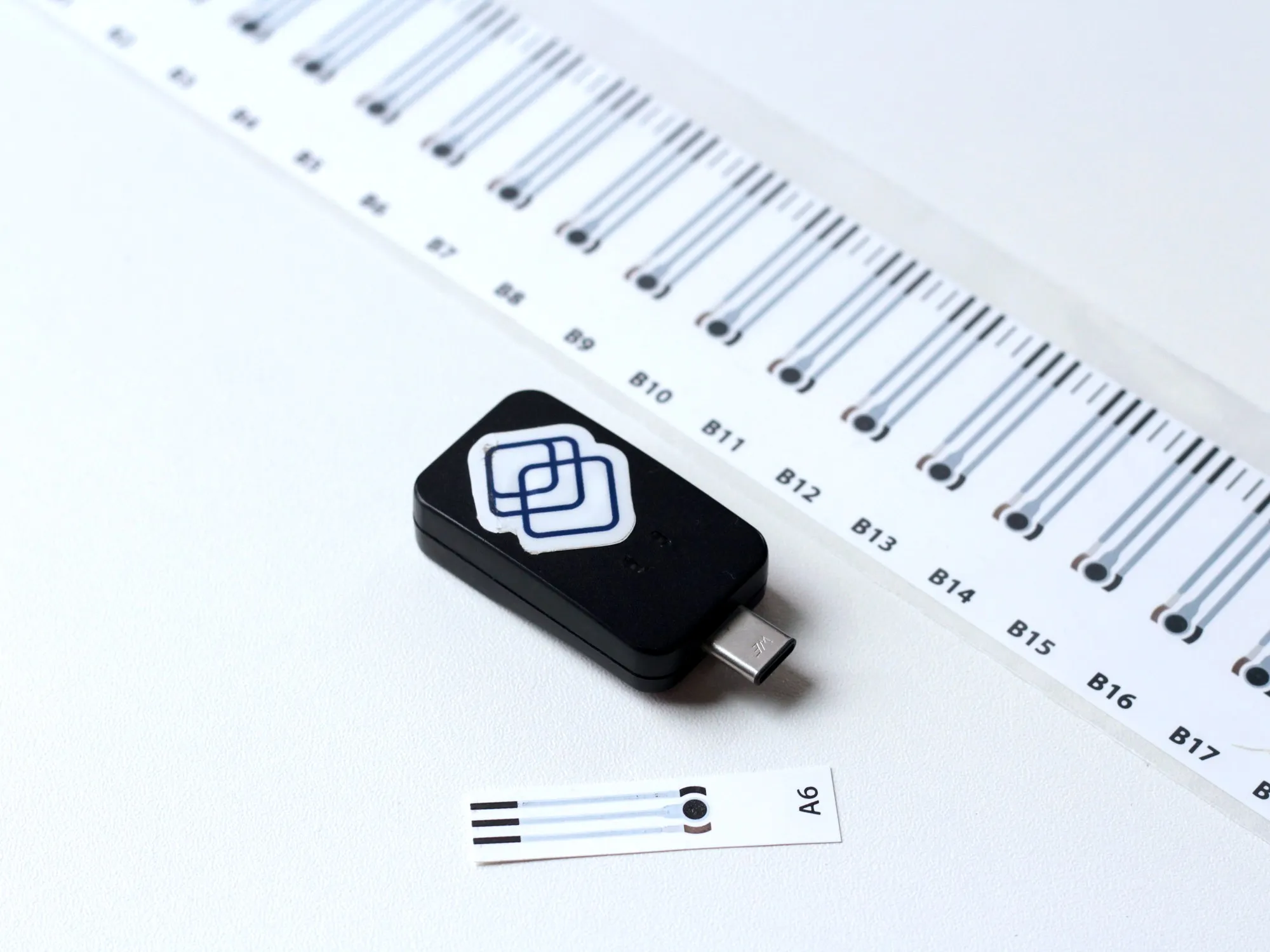
Segura reader alongside a single sensor strip and a full roll of barcoded strips

Segura's proprietary test strips use established screen-printing manufacturing processes — adapted and optimised specifically for heavy metals detection in water. The electrode chemistry is mercury-free and non-toxic, replacing the mercury-based electrodes that constrained classical ASV to the lab and unlocking safe, disposable field deployment.

Segura has optimised the sensor design specifically for simultaneous heavy metals detection across diverse drinking water matrices, achieving signal-to-noise ratios sufficient for sub-ppb detection in real field samples.

Test strips are batch-calibrated during manufacturing — the same principle used in consumer blood-glucose test strips. Every strip in a production batch shares the same calibration, characterised against reference materials before the batch ships. Operators never need to prepare daily standards or run calibration curves in the field. Manufactured under ISO 13485-certified processes to ensure batch-to-batch consistency at scale.

Next-generation sensor formats are in development, targeting substantially improved sensitivity and expanded detection capability.

Consistent results across any water source

Sample preparation

Why matrix matters — and how Segura handles it.

Real-world water samples contain a complex mixture of organic matter, particulates, carbonate and phosphate species, and other dissolved metals that can interfere with electrochemical measurements. Without controlled sample preparation, metal speciation, background current, and calibration validity all shift between sample types — producing results that are unreliable across different water sources.

Segura's proprietary measurement protocol incorporates a defined sample preparation step that normalises the measurement environment. This ensures that background interferences are suppressed, regardless of whether the sample is municipal tap water, groundwater, process water, or surface water.

This matrix normalisation step is what allows Segura's calibration to remain valid across different water matrices without recalibration for each new source — a critical requirement for any field-deployable analytical device used across multiple sites.

On-device. Real-time. No cloud required.

Data pipeline

From raw voltammetric signal to concentration in seconds.

Raw voltammetric signal
After Segura on-device processing

Raw voltammetric data from a stripping experiment contains signal from multiple sources: the Faradaic current from metal stripping, capacitive background current from the electrode double layer, and electronic noise. Separating the analytical signal from these background contributions is where much of the precision is won or lost.

Segura's proprietary on-device processing pipeline isolates the analytical signal from background noise, producing clean peaks whose position identifies the metal and whose height is proportional to concentration. Quantification is performed on-device in real time — no cloud processing is required for a result, ensuring full functionality in areas with limited or no connectivity.

Results are then GPS-tagged, timestamped, and queued for automatic sync to the Segura cloud dashboard when connectivity is available — building a complete, auditable compliance record with no manual data entry.

Proprietary detection panel

Segura's proprietary electrochemical platform uses Anodic Stripping Voltammetry to quantify heavy metals directly in water samples. Detection capability is tiered by current readiness — reflecting where the science is today and where the roadmap leads.

● Available now

Core plumbing panel — co-detected in a single 3–5 minute run

Lead, copper, cadmium, and zinc are electrochemically well-separated, allowing all four to be co-deposited and resolved in a single measurement cycle — four metals, one proprietary strip, one measurement.

Pb
Lead
EU DWD: 5 μg/L  ·  US action level: 15 μg/L
Validated alongside copper in the NYC Bureau of Water Supply pilot and in the first field demonstration at Wadham College, University of Oxford. Current field-validated LOQ: 2 ppb. Target: 0.1 ppb by end of Q2 2026.
Validated ✓
Cu
Copper
EU DWD: 2,000 μg/L
Co-detected with lead in a single run. Strong electrochemical signal enables reliable low-ppb quantification.
Validated ✓
Cd
Cadmium
EU DWD: 5 μg/L
Clean electrochemical separation from lead and zinc. Common impurity in galvanised plumbing. Low-ppb quantification alongside the core panel.
Validated
Zn
Zinc
Primary galvanised pipework indicator
Primary marker for galvanised pipe degradation and a key indicator in industrial process water. Low-ppb detection capability.
Validated
◐ Available on request

Extended panel metals — available to pilot partners on request

These metals are electrochemically detectable and available to pilot partners through dedicated measurement protocols. The 3rd generation sensor is expanding the panel range — manganese is currently the focus of active development.

Mn
Manganese
EU DWD 50 μg/L. Active development focus. Preliminary signal confirmed at low ppb. Protocol optimisation in progress. Target: standalone water quality module.
As
Arsenic
WHO guideline 10 μg/L. Available on request through a dedicated sensor variant — significant global health and regulatory relevance, particularly for groundwater monitoring.
Tl
Thallium
EU DWD 1 μg/L. Characterised in electrochemical literature; available on request with a dedicated protocol.
Sn
Tin
Relevant for food-grade packaging and solder contamination monitoring. Available on request through a dedicated protocol.
Sb
Antimony
EU DWD 5 μg/L. Present in solder formulations. Available on request through a dedicated protocol.
In
Indium
Industrially relevant for semiconductor manufacturing effluent monitoring. Available on request.
Ni
Nickel
EU DWD 20 μg/L. Available on request through a modified sensor variant. Relevant for stainless steel infrastructure and process water monitoring.
Fe
Iron
EU DWD 200 μg/L. Available on request. Key indicator for corrosion in cast-iron distribution networks and discolouration complaints.
○ Roadmap

Extended panel — in pipeline

Additional analytes planned for future sensor variants. These represent the next generation of Segura's detection capability.

Cr
Chromium — Speciation protocol
EU DWD 25 μg/L (total Cr). In pipeline — requires speciation to distinguish Cr(III) from Cr(VI), which is the toxicologically relevant form.
Hg
Mercury — Advanced sensor variant
EU DWD 1 μg/L. In pipeline. Mercury handling and waste disposal considerations apply to field deployment.
Se
Selenium — Protocol development
EU DWD 10 μg/L. In pipeline — dedicated protocol in development.

Outside platform scope: Radionuclides and certain complex transition metals require alternative analytical methods.

Validated in the field. Named partners. Real data.

Segura's analytical performance has been confirmed across multiple independent programmes — in laboratories, in the field, and against named reference methods. Key validated programmes include:

NYC Bureau of Water Supply — Initial pilot deployment demonstrated sample-to-result turnaround of under 5 minutes (versus weeks for lab testing). Early signs of multi-metal detection capability in distribution network samples; the programme concluded with a smaller sample count than planned and is being built on in our current partner cohort.

Independent ICP-MS benchmarking — Segura's accuracy has been benchmarked against ICP-MS across 200+ real-world samples collected from live distribution networks by utility operators themselves. Samples span municipal, borehole, and surface water matrices. Mean deviation is less than 8% across the full detection range, from low ppb to ppm concentrations. Lab-side reference measurements were carried out in collaboration with Dr. Saskia Nowicki at the University of Oxford's School of Geography and the Environment — a water-quality researcher whose prior work spans the World Health Organization, the UK Department for Environment, Food and Rural Affairs (Defra), and SRK Consulting. Dr. Nowicki also advises Segura and is a shareholder in the company — disclosed here for full transparency.

Wadham College, University of Oxford — First real field demonstration, carried out with interested Wadham College staff. This early deployment confirmed that the device and workflow behaved as designed outside the development bench.

USAID-supported programme, Lake Atitlán, Guatemala — Real-world heavy metals surveillance in a developing-world context with no fixed lab infrastructure.

Detection range: Segura's current field-validated limit of quantification (LOQ) for lead is 2 ppb, demonstrated in real distribution network samples against ICP-MS — well below the EU DWD threshold of 5 ppb and the US EPA action level of 15 μg/L. Active development work is on target to reduce this to 0.1 ppb by end of Q2 2026, with a mean-deviation target of less than 5% at the LOD. At the upper end, the platform quantifies reliably up to 2 ppm in a single measurement — higher concentrations remain accessible via standard sample dilution. Because the measurement is electrochemical rather than optical, turbidity and sample colour do not affect results.
Request a validation data pack →
200+
Real samples collected from live distribution networks by utility operators, benchmarked against ICP-MS
±8%
Mean deviation from ICP-MS reference method
2 ppb
Field-validated LOQ for lead. On target to reach 0.1 ppb by end of Q2 2026. Upper range: 2 ppm (higher with dilution).
4
Named institutional partners across UK, US, and Central America

See the technology in action

Request a live demonstration with your water samples — in the lab or in the field.

Request a Demo

The right tool against water contamination,
wherever it matters

From municipal water utilities to humanitarian field operations — Segura is built for the people who need reliable results fast.

Pilots & partnerships

Segura in the field

Real-world work with a major US water utility, a university in Guatemala and a global food and beverage company.

Water Utility

NYC Department of Environmental Protection

One of six companies selected from 100+ applicants for a proof of concept with NYC’s Environmental Tech Lab. DEP staff tested pipeline water from Queens and the Bronx for lead, cutting sample processing from 6 weeks to under 5 minutes. Read DEP’s results ↗
New York City, USA · 2025
Academic

University in Guatemala

Partnering with a university on environmental education, monitoring heavy metals in soils and rivers in Guatemala.
Guatemala · 2025
Food & Beverage

Global food & beverage company

Developing ultra-low-range manganese detection, down to 2 parts per billion, with a global food and beverage company.
In development · 2026
Beyond our pilots

The same test, wherever water is at risk

The technology behind our pilots could be applied wherever fast, reliable, on-site answers matter.

Construction & Remediation
On site, before you backfill
  • ✓
    Confirm lead pipe excavations are complete before backfilling
  • ✓
    Check remediated soil leachate without sending samples to a lab
  • ✓
    Log timestamped, GPS-tagged results for the planning file
NGOs & Global Development
Where there’s no lab to send to
  • ✓
    Community health workers operate independently — no chemist or engineer required
  • ✓
    Works off-grid, with results syncing once there’s a connection
  • ✓
    Builds contamination data where none exists
Industrial & Mining
At the discharge point
  • ✓
    Test effluent before it reaches a watercourse
  • ✓
    Catch spikes during process upsets, before regulators do
Working in another sector?
Get in touch and we’ll explore whether Segura can work for your needs.
Get in touch
Pilot Programme

Pilot E. coli with us
in 2027.

We’re looking for piloting partners to further develop our E. coli parameter. It uses the same reader and the same style of strip, quantifying E. coli in CFU per volume of water filtered. We are looking for a cohort of 2–3 water providers to collaborate on this project.

1

Initial call

We walk through the platform, discuss your use case, and work out whether Segura is the right fit for your sites and sampling programme.

→
2

Pilot partnership

You commit a named technical lead, a defined sampling plan, and the pilot fee. We ship hardware, train your team, support the deployment, and review results together.

→
3

Scale-up

If the pilot validates your use case, we move to scale-up pricing, priority access to the commercial platform, and an optional co-branded case study.

Pilot partnership
Let’s plan your pilot.
Let’s start with your sites and how many tests you need. From there, we’ll work through real samples with you and tailor both the product and the proposal to the people who’ll use it every day.
1Share your needs
2Get a tailored proposal
3Run your pilot
Every pilot includes the device, training, test strips, dedicated support and a joint data review at the end.
Start the conversation ↗
Find us on LinkedIn
Our Story

Oxford-born.
Field-ready.

Everyone has the right to safe water. But knowing whether your water is safe still depends on access to a lab. Segura changes that, putting precise testing in the hands of anyone who needs it, anywhere in the world. Safe water for all is the promise of UN Sustainable Development Goal 6. We're here to help keep it.

Water safety intelligence — everywhere it's needed

Contaminated drinking water is a solvable problem. We have the science. What's been missing is a tool that works outside the laboratory. The WHO and The Lancet Commission on Pollution and Health have identified heavy metal exposure as one of the most preventable environmental health crises of the 21st century, while the WHO also estimates that at least 1.7 billion people drink from a source contaminated with faeces.

Segura exists to close that gap: making the gold standard of heavy metal detection portable, affordable, and operable by anyone.

"Water, sanitation and hygiene are not privileges, they are basic human rights." — Dr Ruediger Krech, World Health Organization, 2025
People lack safely managed drinking water
UK children with elevated blood lead levels

Three principles that guide everything

01

Accuracy above all

We work in line with regulatory standards. Regulators act on data and communities trust results, so we never overclaim.

02

Designed for the operator, not the scientist

If it needs a chemistry PhD to operate, we've failed. We design for field workers, utility engineers and health workers, not lab researchers.

03

Honest about limitations

No technology does everything. We're open about where Segura works and where it doesn't, and we'll tell you if it's not the right fit.

Jose Castro
Jose Castro — Founder & CEO

The water problem came first. The science came second.

Segura started with a frustration, not a technique. Our founder — Oxford-trained and with a background building disposable electrochemical sensors in the glucose-monitoring industry at Masimo Labs — kept encountering the same problem: communities and utilities that needed to know whether their water was safe, but couldn't get an answer without sending samples to a distant lab and waiting weeks for results. Heavy metals were the starting point — but the vision was always broader: a field-ready platform for water quality testing, full stop.

The gap wasn't in the science. Anodic Stripping Voltammetry has been able to detect heavy metals at parts-per-billion concentrations since the 1970s. The gap was in the delivery: the instruments existed in research labs, but a water engineer in Oxfordshire couldn't use them, and a health worker in sub-Saharan Africa certainly couldn't. The disposable glucose strip — a technology our founder had spent years manufacturing — was the missing analogy: heavy metals should work the same way.

So Segura built it. All of the company's chemistry, sensor design, and signal processing is foreground intellectual property, developed independently — not inherited from any university or prior employer.

The first working prototype was built in 2023 and has been iterating towards commercial scale ever since, with initial pilot work carried out alongside water utility partners in Oxfordshire and early field demonstrations run from Wadham College, University of Oxford, supported by Dr. Saskia Nowicki — a water-quality researcher at the University of Oxford, Segura advisor, and shareholder in the company.

From lab bench to field-ready

2021
The idea
The core idea for a field-portable heavy metal testing platform takes shape — inspired by decades of published work on Anodic Stripping Voltammetry and the long-standing gap between lab-grade electrochemical methods and field deployability.
2023
Prototype, first pilots & initial funding
First working prototype validated against bench ICP-MS — accuracy confirmed at ±12%. First real-world pilot with an Oxfordshire water utility and first field demonstration at Wadham College, University of Oxford — investigating lead contamination from legacy pipework. Initial funding received from Founders Factory and Planet Fund. Sensor strip v2 reduces time-to-result from 12 min to under 5 min.
2024
Independent validation & international pilots
Independent validation across 200+ real-world samples — collected from live distribution networks by utility operators themselves and benchmarked against ICP-MS — confirms less than 8% mean deviation across the full detection range, from low ppb to ppm. Featured in BBC coverage.
2025
NYC DEP pilot
Initial pilot with the NYC Department of Environmental Protection, which manages one of the world's largest municipal water systems, serving 8.3 million people. View pilot results ↗
2026+
E. coli detection
Extending the same reader and strip format to E. coli, quantifying it in CFU per volume of water filtered. We're looking for a cohort of 2–3 water providers to pilot it with us in 2027. Pilot E. coli with us →

Interested in working with us?

Whether you're a water utility, an investor, a researcher, or a journalist — we're always open to the right conversations. We're a small team and we respond personally to every message.

FAQ

Frequently asked questions

What does a Segura pilot involve?

A Segura pilot is a paid, fixed-scope partnership — typically three months, a named technical lead on your side, and a defined sampling plan at your sites. We provide the hardware, training, ongoing technical support, and a joint data review at the end. You commit the pilot fee, the samples, and honest feedback.

Can I test my home water with this?

Not yet. Segura isn't currently sold to individuals. It's designed for organisations that test water at scale, such as governments, water utilities and providers, environmental consultancies, NGOs and field teams. We aim to make it available for home use in the future.

How accurate is Segura compared to laboratory ICP-MS?

Independent validation across 200+ real-world samples — collected from live distribution networks by utility operators themselves and benchmarked against ICP-MS — shows less than 8% mean deviation across the full detection range. The US EPA accepts ±15% variation for approved methods, so Segura sits comfortably inside that envelope across the range. Our current development target is less than 5% mean deviation at the limit of detection.

What is Segura's limit of detection for lead?

Our current field-validated limit of quantification (LOQ) is 2 ppb for lead, demonstrated in real distribution network samples against ICP-MS — well below the EU DWD regulatory threshold of 5 ppb. Active development work is on target to reduce this to 0.1 ppb by end of Q2 2026. At the upper end, the platform quantifies reliably up to 2 ppm in a single measurement; higher concentrations remain accessible via standard sample dilution. Unlike colorimetric strip tests, turbidity and sample colour do not affect results because the measurement is electrochemical rather than optical.

Does the device require calibration?

No field calibration. Segura test strips are batch-calibrated during manufacturing — the same principle used in consumer blood-glucose test strips. Every strip in a production batch is characterised against reference materials before it ships, so the operator never needs to prepare daily standards, run calibration curves, or handle toxic reagents in the field.

What metals can Segura detect?

The core panel detects lead (Pb), copper (Cu), cadmium (Cd), and zinc (Zn) simultaneously in a single measurement. Additional metals including arsenic, manganese, nickel, mercury, and selenium are available on request or in the pipeline.

How is Segura different from spectroscopy?

Spectroscopy measures light: how much light a sample absorbs or gives off at certain wavelengths. In the field, that usually means a photometer and a colour-changing reagent. In the lab, it means large instruments like AAS or ICP-OES, often used alongside ICP-MS.

Segura uses electrochemistry. It measures electrical current, not light. For metals like lead, the test strip first pulls the metal out of the water and onto an electrode. Then it strips the metal off again and measures the current that produces. Where the signal peaks tells you which metal is there. How big the peak is tells you how much. Because the first step concentrates the metal on the electrode, a disposable strip and a handheld reader can measure down to low ppb levels.

What else can Segura test beyond heavy metals?

Segura's platform is designed as a general-purpose water quality testing system — heavy metals are the first application, not the only one. We are actively working on rapid E. coli testing, quantified in CFU per volume of water filtered, in the same disposable strip format. We are also evaluating a range of third-party sensor strips for integration into the Segura reader, covering additional priority contaminants. If you have a specific analyte requirement, get in touch — we may already have it on the roadmap.

Does Segura measure total metals or dissolved metals?

Segura's method is specifically designed to quantify total metals — this is the regulatory-relevant measurement for lead under the EU Drinking Water Directive, the US EPA Lead and Copper Rule, and UK DWI guidance. Total lead includes both dissolved and particulate forms, which is critical because lead pipe corrosion products are often particulate. Speciation (distinguishing dissolved from particulate fractions, or different oxidation states) is possible for some metals through changes to the sample preparation protocol — get in touch if your application requires speciation.

How long does a test take?

Under five minutes from sample to result, including sample preparation. Results are GPS-tagged and automatically synced to the cloud dashboard.

Do operators need specialist training?

No. The device is designed so that any field technician can operate it with minimal training — no chemistry background required. Most operators are fully trained within a single session.

Does it work without internet connectivity?

Yes. All analysis is performed on-device in real time. Results are stored locally and sync to the cloud dashboard when connectivity is restored.

What water types can be tested?

Segura works with municipal tap water, groundwater, surface water, and process water. The measurement protocol incorporates a sample preparation step that normalises background interferences across different water matrices.

Does Segura replace lab testing?

No. Lab methods like ICP-MS are still the reference for regulatory compliance. Segura is for decisions that can't wait days for lab results: screening, troubleshooting, and checking whether a fix worked. Only the samples that need confirming go to the lab.

Where is Segura based?

Segura is headquartered in Oxford, United Kingdom, with roots in the University of Oxford's Geography Department. The company was founded in 2023.

What regulatory standards does the platform support?

The dashboard supports reporting formats for UK DWI, US EPA (Lead and Copper Rule), and EU Drinking Water Directive requirements. Export-ready compliance reports are generated with one click.

Is Segura an approved method for regulatory reporting?

EPA certification and MCERTS accreditation are both in progress. Segura is currently suitable as a screening tool — flagging exceedances for lab confirmation. Many utilities use it to prioritise which samples to send for formal ICP-MS analysis, dramatically reducing unnecessary lab submissions.

How much does it cost per test?

Pricing depends on testing volume. Please get in touch for a quote tailored to your deployment.